What if you could swap weeks of logbook stress for a single afternoon on the water with a mentor who actually wants you to succeed? Many people searching for how to get a boat licence assume they’re stuck with a complicated logbook process that drags on for months. It’s completely normal to feel a bit of anxiety about the theory test or the thought of docking a boat for the first time while others are watching. You just want to get out there safely without the constant worry of making a mistake or facing a heavy fine from a simple misunderstanding of the rules.
We understand that the regulatory hurdles can feel like a barrier to the coastal lifestyle you’ve been dreaming of. That’s why Master Boat Licence has put together this complete 2026 guide to show you the quickest, most supportive way to secure your licence and build genuine confidence behind the wheel. We’ll walk you through the latest licence fees, the exact documents you need to pack, and how a professional one-day course can replace the DIY logbook grind. By the end of this article, you’ll have a clear, step-by-step map to becoming a safe and licensed skipper.
Key Takeaways
- Understand the “10-knot rule” and why most boaters in New South Wales require a licence to operate their vessels legally.
- Compare the traditional DIY logbook method with the efficiency of an accredited one-day course to find the fastest path for your schedule.
- Learn the specific steps for how to get a boat licence in NSW, including how to study the official handbook and pass the theory test.
- Gain practical skills that go beyond the classroom, ensuring you feel comfortable and safe when taking the helm for the first time.
- Prepare your application with confidence by knowing exactly which certificates and identification documents you need for your Service NSW visit.
Understanding the NSW General Boat Licence Requirements
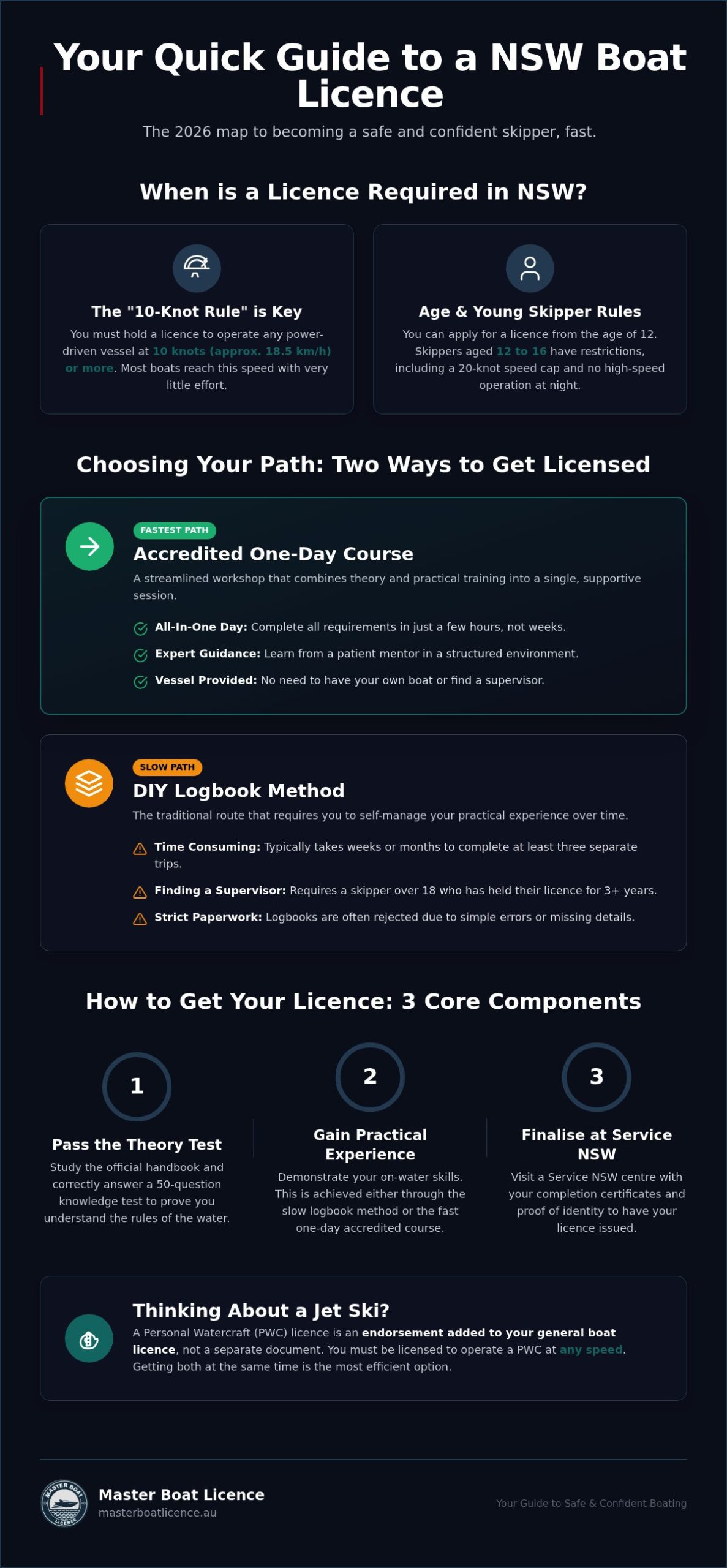
A General Boat Driving Licence is your gateway to exploring the beautiful coastlines and rivers of New South Wales. It’s more than just a piece of plastic in your wallet; it’s proof that you have the skills to keep your passengers and other water users safe. When you’re looking at how to get a boat licence in NSW, the first thing to understand is the “10-knot rule”. In NSW, you legally must hold a licence the moment you operate a power-driven vessel at a speed of 10 knots or more. That is roughly 18.5 km/h, which most boats hit with very little effort.
The journey can start earlier than you might think. You can apply for a licence from the age of 12. Young adult sailors, those aged between 12 and 16, have specific restrictions to ensure they gain experience safely. These include speed caps of 20 knots and a requirement to stay off the water at speed during the night. To secure your qualification, you need to complete two core components: a 50-question knowledge test and evidence of practical experience. This ensures you understand the theory of the waterways and can handle a vessel with confidence.
Who Needs a Licence in NSW?
Most recreational vessels fall under these licensing requirements. This includes everything from large cabin cruisers to small aluminium “tinnies” with modest outboard motors. If your boat has an engine and you intend to travel faster than a brisk walking pace, you need to be licensed. These regulations are a significant part of NSW Maritime history, which saw safety standards evolve to manage our increasingly busy waterways. Even if you only plan to go out occasionally, being licensed ensures you won’t face heavy fines for simple non-compliance. Our approach at Master Boat Licence is built on a “no experience needed” philosophy, meaning we help you understand these rules from the ground up.
The PWC (Jet Ski) Upgrade
If your dream involves the agility of a jet ski, you’ll need a PWC (Personal Watercraft) licence. It’s vital to remember that a PWC licence isn’t a standalone document; it’s an endorsement added to your general boat licence. Unlike boats, you must have this licence to operate a jet ski at any speed, even if you’re just idling through a channel. If you’re already learning how to get a boat licence in NSW, it makes sense to complete the PWC upgrade at the same time. Doing both together is efficient and ensures you’re fully prepared for any adventure you choose to take on the water.
Choosing Your Path: DIY Logbook vs. Accredited Training Courses
Deciding how to get a boat licence in NSW often comes down to how much time you have and whether you already have access to a boat. The DIY logbook method is the traditional route, but it requires patience and a willing mentor. Conversely, an Accredited Training Provider (ATP) offers a streamlined workshop that condenses the entire process into a single day. While the DIY path might seem cheaper on paper, the time investment often stretches from weeks into months as you try to coordinate schedules and weather conditions.
For most beginners, the choice is between a long, self-managed slog and a professional, guided experience. If you choose an ATP, you’ll benefit from a structured environment where the theory and practical components are integrated. This approach removes the guesswork and ensures you aren’t just memorising facts, but actually understanding how they apply when you’re behind the wheel. It’s the difference between struggling through a manual alone and having an expert show you the ropes in real-time. Time-poor professionals and families who want to bypass the logbook grind entirely will find that a boat licence one day course NSW offers the most direct path to getting on the water with genuine confidence.
The Logbook Hurdle Explained
The DIY route requires you to complete at least three separate trips on a powered vessel with an experienced skipper. This supervisor must be over 18 and have held their licence for at least three years. Finding someone who fits this criteria and has the time to take you out can be a significant challenge. Service NSW is incredibly strict about how these trips are recorded. Common mistakes, such as missing signatures or incorrect date formats, often lead to logbook rejection. You can find the full list of administrative requirements in the NSW Government boat licence guide to see exactly what you’re up against.
Benefits of a Professional One-Day Course
When you join a course with a patient mentor like Greg, the entire atmosphere changes. You aren’t just a number; you’re a student learning a new craft from the start. We provide the vessel for your practical training, which means you don’t need to own a boat or know someone who does. The theory sessions are designed to cover the exact safety rules and regulations you’ll face in the knowledge test, delivered in a way that actually sticks. If you want to skip the administrative headaches and gain genuine confidence, booking a NSW General Boat Licence Course is the most efficient way to get your weekend started on the water.
Mastering the Theory: How to Pass the NSW Knowledge Test
Passing the theory component is a major milestone when learning how to get a boat licence in NSW. The test is based entirely on the NSW Boating Handbook, which serves as the foundation for maritime safety across the state. While the handbook is comprehensive, many students feel overwhelmed by the sheer volume of information. The actual test consists of 50 multiple-choice questions divided into two distinct parts. In Section A, you need to answer at least 24 out of 30 questions correctly. However, Section B is the real hurdle; it focuses on critical safety rules, and you must answer all 20 questions correctly to pass. If you’re upgrading to a PWC licence, there’s an additional 15 questions where you need at least 12 correct answers.
Many people find that simple rote learning isn’t enough to feel confident on the water. It’s one thing to pick the right answer on a screen and another to know what to do when a large ferry is bearing down on you in Sydney Harbour. That’s why our workshops focus on the “why” behind the rules. We don’t just want you to pass a test; we want you to be a safe skipper who understands the mechanics of the waterways. This deeper understanding makes the Service NSW application process feel like a formality rather than a stressful exam.
Key Study Areas You Must Know
Give-way rules are the most vital part of your study. You need to know which vessel has the right of way in various scenarios to avoid collisions. Navigation marks, such as lateral buoys and cardinal marks, act like road signs on the water. You’ll also need to memorise safety equipment requirements, which change depending on whether you’re in enclosed or open waters. Speed limits and distance requirements are equally important. For example, you must maintain a specific distance from swimmers, divers, and other vessels to ensure everyone stays safe.
Tips for Test Day Success
Staying calm is the most important part of test day. Many students stumble on “trick” questions because they rush through the text. The difference between “must” and “should” can change the entire legal meaning of a maritime rule. This is where classroom-based learning provides a distinct advantage. In our workshops, Greg breaks down these complex maritime laws into everyday language, making them much easier to remember. We use practice tests to build your confidence before you face the real thing. The theory test is about safety, not just memorisation.
Practical Boating Experience: Gaining Confidence on the Water
Practical training is where the theory from the handbook finally meets the reality of the water. While passing the knowledge test is a legal requirement, the on-water session is where you build the muscle memory needed to keep your vessel and passengers safe. If you are researching how to get a boat licence in NSW, you might be worried about your lack of experience. We specialise in teaching beginners from the absolute start. You don’t need to have ever stepped foot on a boat to succeed in our course; we provide the vessel and a patient environment to learn at your own pace.
There is a significant difference between simply “driving” a boat and truly “handling” a vessel. Driving is what you do in open water when you have plenty of room to move. Handling is the skill required when the wind is gusting, the tide is pulling, and you need to bring the boat alongside a jetty with precision. Our goal is to move you beyond just steering and help you understand how momentum and environmental factors affect your boat’s movement. This practical foundation is what prevents accidents and ensures you can enjoy your time on the water without stress.
Essential Boat Handling Skills
We focus on the manoeuvres that matter most for everyday boating. Low-speed control is the primary focus, as most incidents occur near wharves or in crowded channels. You will learn how to dock the boat safely, accounting for the way a vessel continues to move even after the engine is in neutral. We also cover “man overboard” procedures and emergency stops, which are critical safety skills that every skipper must master. Before we even leave the dock, we walk you through pre-departure checks and the proper use of safety equipment, so you know exactly what to do before the key even turns in the ignition.
The Practical Assessment Process
The practical assessment is designed to be a supportive learning experience rather than a high-pressure exam. It follows a logical four-step progression:
- Step 1: An on-water safety briefing where we review lifejackets, flares, and emergency gear.
- Step 2: Demonstrating control of the vessel at various speeds to show you understand throttle response.
- Step 3: Successful completion of required manoeuvres, such as figure-eights and docking, under Greg’s supervision.
- Step 4: Receiving your certificate of completion, which serves as your evidence of practical experience for Service NSW.
If you’re ready to get behind the wheel and start your journey, book your Practical On-Water Training with us today and learn from the best in the business.
Completing Your Application and Getting Your Licence
Once you’ve passed your training and practical assessment, the final step in learning how to get a boat licence in NSW is officially lodging your application. This part of the journey happens at a Service NSW centre. It’s a straightforward process, but being organised ensures you won’t have to make a second trip. You’ll need to bring your completed application form along with the evidence of practical experience and the knowledge test results we provide during our workshop. It’s an exciting moment when the paperwork is finally handed over and your new life as a skipper begins.
You have several options when it comes to the duration of your licence. You can choose a term of one, three, or five years, or even a ten-year licence if you’re a committed boater. As of July 2026, the fee for a one-year adult general boat licence is A$82, while a five-year licence is A$372. If you’ve also earned your PWC endorsement, there are additional fees to consider. For example, a one-year PWC licence costs A$260 on top of your general boat fee. Many people find the longer-term licences offer better value and less administrative hassle over time.
Modern technology has made carrying your credentials easier than ever. While Service NSW will mail you a physical plastic card, you can also access a digital version immediately. By using the Service NSW app, your digital licence is stored securely on your phone. It’s legally recognised by maritime authorities and is incredibly handy if you happen to forget your wallet at home. Having your licence on your phone means you’re always ready for a spontaneous day on the water.
The Final Checklist for Service NSW
Before you head to your local centre, double-check that you have everything required. You must provide proof of identity, such as a current Australian drivers licence or a passport. You’ll also need the original certificate of completion you received from Master Boat Licence. Make sure you have a way to pay the government licence fee; most centres accept credit cards or EFTPOS. If you’re under 16, remember that a parent or legal guardian must be present to sign your application. Having these items ready makes the lodgement process quick and stress-free.
Launching Your Boating Lifestyle
Becoming a licensed skipper opens up a world of freedom and adventure. Whether you’re planning a quiet fishing trip or a high-speed afternoon on a jet ski, you now have the skills to do it safely. Remember that being a good skipper involves ongoing learning and staying updated with any changes to maritime rules. Our goal is to ensure you feel like a confident, capable member of the boating community from your very first day. If you haven’t started yet, now is the perfect time to organise your one-day course with Master Boat Licence today and get out on the water.
Ready to Take the Helm?
Getting out on the water shouldn’t feel like a regulatory chore. You now have a clear map of the licensing process, from understanding the legal requirements to navigating the final paperwork at Service NSW. The most important takeaway is that you don’t need to own a vessel or have years of experience to succeed. By choosing a structured path, you can bypass the long logbook grind and focus on building the genuine skills that keep you and your family safe.
If you’re looking for the most efficient way for how to get a boat licence in NSW, our workshops are designed specifically for you. You’ll learn from Greg, our expert and patient mentor, who specialises in supporting absolute beginners with zero prior knowledge. We complete both the theory and practical training in a single day, ensuring you gain confidence behind the wheel in a relaxed environment. There is no better time to start your journey and enjoy the freedom of our beautiful local waterways.
Book your stress-free one-day boat licence course now and transform from a beginner into a licensed skipper. We look forward to seeing you on the water and helping you launch your new boating lifestyle with confidence.
Frequently Asked Questions
Do I need my own boat to get a licence in NSW?
No, you don’t need to own a vessel to obtain your qualification. We provide a fully equipped school boat for all practical training and assessments. This is perfect for beginners who want to learn the ropes before they decide to buy their own vessel. You’ll gain hands-on experience on our professional boat, which is set up specifically to help you master low-speed manoeuvres and docking.
How long does the NSW boat licence course take?
Our comprehensive workshop is designed to be completed in a single day. This streamlined format covers all the essential theory and practical components required by Transport for NSW in one go. Instead of spending weeks trying to coordinate logbook trips with a licensed friend, you can finish everything from the start to the final assessment in just a few hours. It’s the most efficient way to get on the water.
Can I get my boat and jet ski licence on the same day?
Yes, you can absolutely complete both your general boat and PWC (jet ski) licences on the same day. Since the PWC licence is an upgrade to the general licence, it makes sense to tackle the additional theory while the safety rules are fresh in your mind. This combined approach saves you a second trip and ensures you’re fully prepared for any adventure you choose to take.
What happens if I fail the boat licence theory test?
If you don’t pass the theory test on your first try, there’s no need to worry. We provide a supportive environment and will help you review the specific sections of the handbook where you struggled. Most students find that a little extra guidance on complex maritime laws is all they need. You can usually resit the test once you’ve had a chance to go over the rules again with Greg’s help.
Is the NSW boat licence valid in other Australian states?
Yes, your NSW boat licence is generally recognised in other Australian states and territories for recreational use. If you’re planning a holiday in Queensland or Victoria, you can usually operate a vessel under your NSW credentials for a short period. However, if you move permanently to another state, you’ll eventually need to transfer your licence to the local maritime authority according to their specific regulations.
How much does a boat licence cost in NSW for 2026?
As of July 2026, the Service NSW fee for a one-year adult general boat licence is A$82. If you want to add a PWC endorsement, there’s an additional one-year fee of A$260. There are also knowledge test fees: A$43 for the boat test or A$64 for a combined test. These government fees are paid directly to Service NSW when you lodge your final application at a centre.
Do I need to renew my boat licence every year?
No, you don’t have to renew every year unless you choose the one-year term. When you’re learning how to get a boat licence in NSW, you can select a duration of one, three, five, or even ten years. Choosing a longer-term licence often works out to be better value over time. It also saves you the administrative hassle of frequent renewals and keeps your digital licence active on the Service NSW app.
Can a 12-year-old get a boat licence in NSW?
Yes, children as young as 12 can obtain a junior boat licence in New South Wales. This “young adult” licence comes with specific safety restrictions, such as a 20-knot speed limit and a ban on towing anyone. It’s a fantastic way for kids to learn maritime safety from the start. Once they turn 16, they can upgrade to a full adult licence without needing to sit the knowledge test again.